

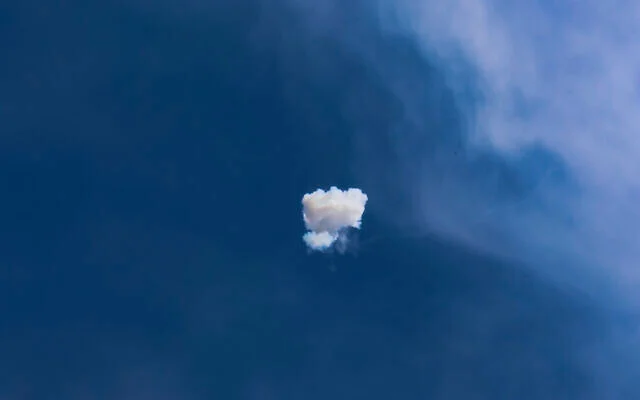
Qatar Security Alert July 17 2026: Iran Attacks, Missiles Intercepted, Child Injured by Shrapnel
This is the third time in less than two weeks that Qatar has issued a public safety alert to its residents. On Friday July 17, 2026, phones across Doha lit up with back-to-back National Emergency Alerts as Iranian attacks targeted the country and Qatar’s armed forces worked to intercept them in real time.
Here is everything that happened, in order, from the first alert to the all-clear, based entirely on official statements from Qatar’s Ministry of Interior and Ministry of Defence.
The Alerts: What Your Phone Said and When
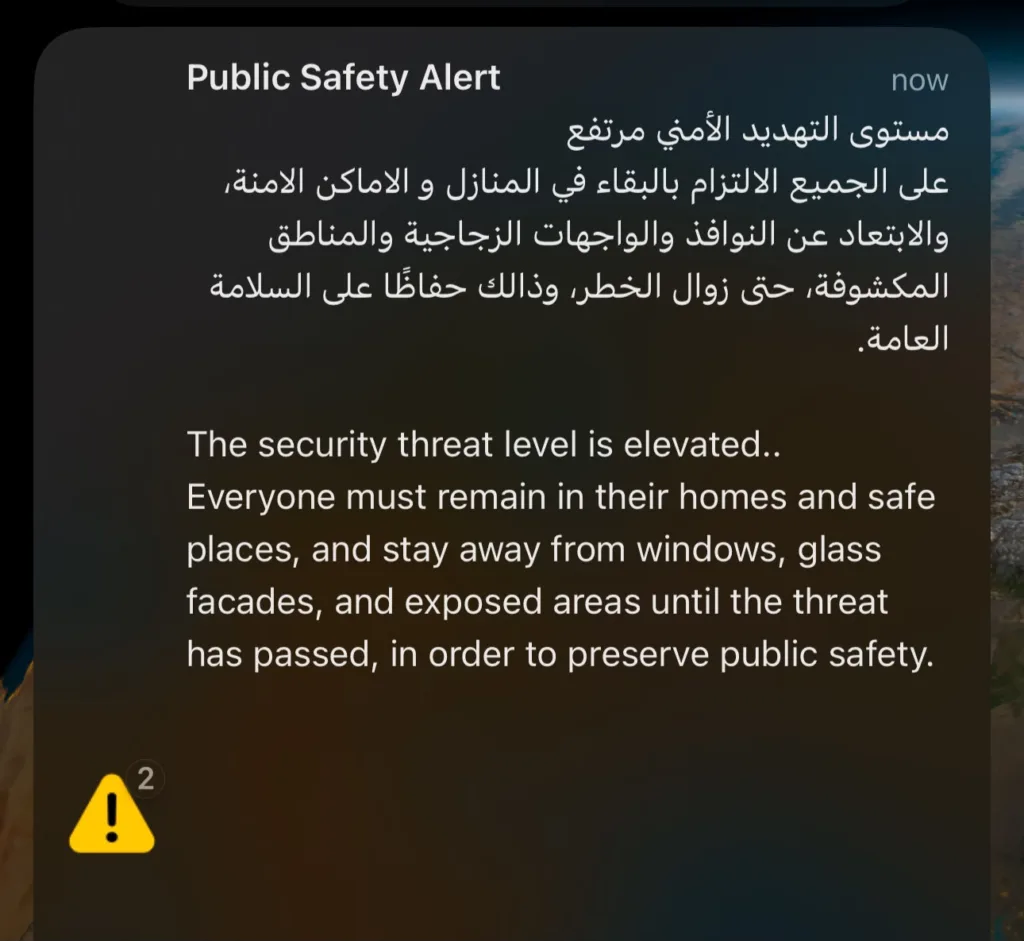
At 3:29 AM, the first elevated security alert was pushed to all phones in Qatar. The message instructed all residents to remain indoors and move away from windows and exposed areas. Shortly after at 3:52 AM, Qatar’s Ministry of Interior confirmed that the security threat had ended and the situation had returned to normal.
At 5:41 AM, a second Public Safety Alert arrived with the same message: the security threat level is elevated. Everyone must remain in their homes and safe places, and stay away from windows, glass facades and exposed areas until the threat has passed.
The dual alerts across a two-hour window indicate that the attacks were not a single isolated incident but a sustained series of incoming threats that required Qatar’s air defences to operate continuously.
Shortly after at 6:02 AM, Qatar’s Ministry of Interior confirmed that the security threat had ended and the situation had returned to normal. The Ministry urged the public to continue following official instructions and guidance from relevant authorities.
Qatar Ministry of Defence: Two Official Statements
Qatar’s Ministry of Defence issued two separate statements during the incident.
The first confirmed that Qatari armed forces had intercepted a missile attack targeting the State of Qatar.
The second, issued approximately one hour later, confirmed that Qatar’s armed forces were continuing to intercept a number of air attacks targeting the country.
Both statements closed with the same words: “May Allah protect Qatar, its Amir, its people, and all residents on its land.”
One Child Injured by Falling Shrapnel
Qatar’s Ministry of Interior confirmed in its official press release dated Sunday July 17, 2026, that one child sustained an injury due to falling shrapnel resulting from the interception operations. The child is receiving the necessary medical care.
This is the most significant ground-level consequence confirmed by Qatari authorities from the attack. The injury came not from an incoming missile reaching its target but from debris falling after Qatar’s air defences intercepted the projectile mid-air, a known risk when interception systems engage attacking munitions.
The Ministry of Interior explicitly stated: “The Ministry confirms that one child was injured by falling shrapnel resulting from the interception operations, and is currently receiving the necessary medical care.”
The Ministry also issued a firm warning: “The Ministry emphasizes the strict necessity of obtaining information solely from official sources, and refraining from circulating rumors or publishing any unverified information, photos, or video clips, in order to avoid legal accountability.”
What Is Happening in the Region: The Sixth Night of Strikes
This attack on Qatar did not happen in isolation. July 17 marked the sixth consecutive night of US military strikes on Iran. US Central Command confirmed that US forces including fighter jets, aerial drones and warships launched precision munitions hitting dozens of Iranian military targets including coastal surveillance and air defence sites, military logistics infrastructure and maritime capabilities.
Iranian forces responded across the entire Gulf region. Iranian army statements said they targeted US military deployment sites and logistical support centres in Kuwait with drones. Kuwait’s army confirmed it was responding to missile and drone attacks and intercepted 32 drones overnight. Explosions were also reported in Iraq’s northern city of Sulaimaniyah. The IRGC said it attacked a US special operations command centre at the al-Tanf military base in Syria.
In southern Iran, US strikes hit civilian infrastructure including bridges, airports, power facilities and a train station. Explosions were reported in Bandar Abbas, Ahvaz, Qeshm, Bushehr, Sirik, Bandar-e Lengeh and other cities along Iran’s southern coast. US strikes hit the Chabahar maritime control tower for the third time in a week.
Iran’s military spokesman stated that the Strait of Hormuz will never return to its pre-war status and that no oil or gas will be exported through the waterway for as long as US attacks continue. The International Energy Agency warned that global energy security remains at serious risk without resumed oil shipments through the strait, noting that Asia in particular, which received 80 to 90 percent of its energy through Hormuz, is being hit hardest.
Oil prices continued to climb, with Brent crude rising above $85 a barrel and WTI approaching $80. Both benchmarks have gained nearly 12 percent in the week, their strongest consecutive weekly gains since the conflict began.
What This Means for Qatar Residents
This is the third confirmed security alert Qatar has issued in the past ten days, following those on July 9 and July 12. Each time, Qatar’s air defence systems have successfully intercepted incoming threats. The injury from falling shrapnel on July 17 is a reminder that even successful interceptions carry ground-level risks, and the instruction to stay away from windows, glass facades and open outdoor areas during alerts is not precautionary but practical.
If you are in Qatar and receive a Public Safety Alert, go indoors immediately, stay away from all windows and glass, and do not go outside until you receive the official all-clear from MOI Qatar. All official updates come from @MOI_Qatar and @MOD_Qatar on X. Do not share unverified photos or videos as the Ministry of Interior has warned this carries legal consequences.
For a full timeline of previous Qatar security alerts during this conflict period, see our coverage of the July 9 security alert and the July 12 security alert.
Frequently Asked Questions
What happened in Qatar on July 17 2026?
Qatar was targeted by Iranian missile and air attacks. Qatar’s armed forces intercepted multiple incoming attacks. One child was injured by falling shrapnel from interception operations. Two public safety alerts were issued and the all-clear was given shortly after 5:41 AM.
Was anyone killed in Qatar during the July 17 attack?
No deaths have been confirmed. Qatar’s Ministry of Interior confirmed one child was injured by falling shrapnel and is receiving medical care.
Who attacked Qatar on July 17?
Qatar’s Ministry of Interior explicitly named Iran as the source of the attack in its official statement: “following the Iranian attack that targeted the country this morning.”
Is Qatar safe now?
Qatar’s Ministry of Interior confirmed that the security threat has ended and the situation has returned to normal. Residents should continue monitoring @MOI_Qatar on X for any further updates.
Why is Qatar being targeted?
Qatar hosts Al Udeid Air Base, one of the largest US military installations in the world. As Iran retaliates against US strikes across the Gulf region, US facilities and their host countries have come under attack. This is the third time Qatar has been targeted since the Iran-US conflict escalated.
Sources: Qatar Ministry of Interior (@MOI_QatarEn), Qatar Ministry of Defence (@MOD_Qatar) , Al Jazeera live blog July 17 2026.
This article will be updated as further official information becomes available.