

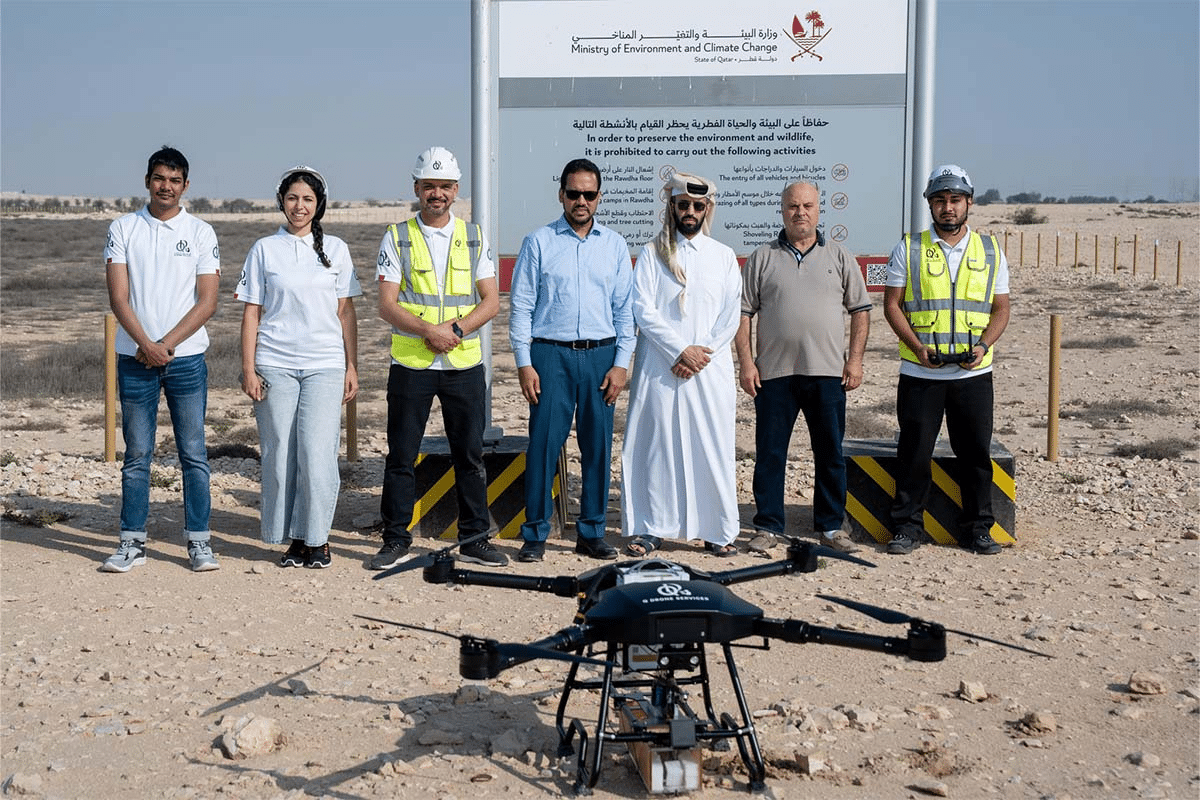
The Ministry of Environment and Climate Change has deployed drone technology to disperse native wild plant seeds in Rawdat Umm Al Sahnat, marking a significant step in Qatar’s efforts to combat desertification and restore natural ecosystems.
Organised by the Wildlife Development Department, the field initiative used GPS-guided drones equipped with smart spraying systems to sow around 5,000 locally sourced seeds. The selected species included wild ziziphus, ghaf, acacia ehrenbergiana (Salam), and acacia tortilis (Samr), all vital to sustaining local biodiversity.
The seeds were treated and coated with biodegradable organic material to protect them and improve germination rates. Distribution was carried out with high precision to ensure even coverage across the meadow.
Assistant Director of the Wildlife Development Department, Dr Dhafi Heedan, said the initiative forms part of a broader national strategy to rehabilitate degraded rangelands using innovative and environmentally friendly technologies. He highlighted drones and artificial intelligence as key tools in accelerating cultivation and restoring ecological balance.
QDrone Director Hamad Rashid Al Ward noted that the project was implemented on a voluntary basis, following field studies to determine optimal locations and timing during the rainy season, increasing the chances of successful vegetation growth.
The initiative aligns with Qatar National Vision 2030 and the National Action Plan to Combat Desertification, reinforcing Qatar’s commitment to environmental innovation and sustainability.