

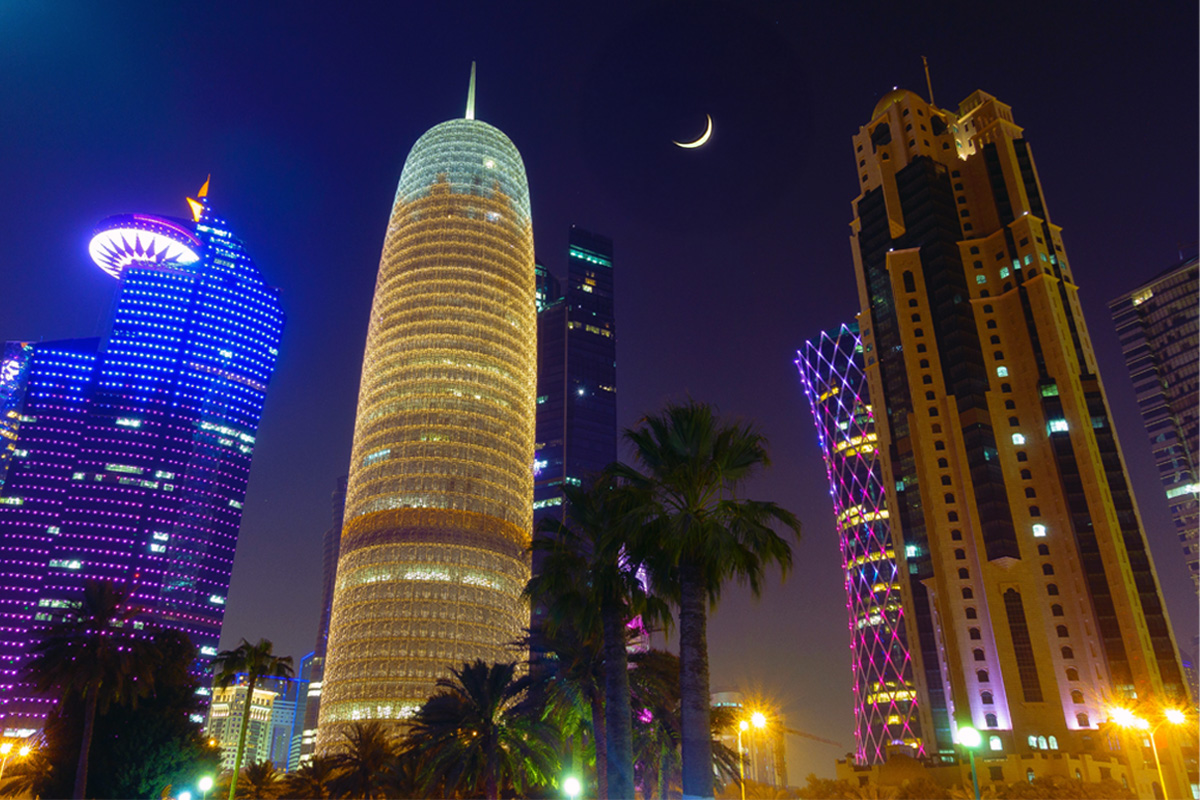
Every year, when the crescent moon rises to mark the start of a new lunar cycle, more than a billion Muslims around the world welcome a month unlike any other. That month is Muharram, and for many in Qatar and across the globe, it carries a quiet but very real weight.
Muharram is the first month of the Islamic Hijri calendar. Its name comes from the Arabic root meaning “forbidden” or “sanctified.” This is not just a label. In Islam, Muharram is one of four sacred months explicitly mentioned in the Quran, alongside Dhul-Qadah, Dhul-Hijjah, and Rajab. The Quran states in Surah At-Taubah (9:36): “Indeed, the number of months with Allah is twelve lunar months… of these, four are sacred.”
The Prophet Muhammad (peace be upon him) also described its spiritual weight in a hadith recorded in An-Nasai: “The best fasting after the month of Ramadan is fasting in the month of Allah, Al-Muharram.”
In simple terms, Muharram is a time for Muslims to slow down, reflect, and renew their connection with their faith. It is not a month of loud celebrations. It is a month of prayer, gratitude, voluntary fasting, and remembrance.
When Is Muharram 2026 in Qatar?
1st Muharram 2026 (Islamic New Year 1448 AH) is expected to fall on Tuesday, June 16, 2026 in Qatar.
This date is based on astronomical lunar calculations. As with all Islamic months, the official confirmation depends on the physical sighting of the crescent moon, which is announced by Qatar’s moon-sighting committee. The date may shift by one day based on that announcement.
Here are the key dates to note for Muharram 2026 in Qatar:
| Date | Muharram Day | Significance |
|---|---|---|
| June 16, 2026 (expected) | 1 Muharram | Islamic New Year 1448 AH |
| June 24, 2026 (expected) | 9 Muharram | Recommended fasting day (Tasu’a) |
| June 25-26, 2026 (expected) | 10 Muharram | Ashura, the most significant day of the month |
All dates are subject to moon sighting confirmation.
The Islamic New Year: What It Means and Why It Matters
The Islamic New Year, also called 1 Muharram or Ras al-Sanah al-Hijriyya, marks the start of the Hijri calendar year. In 2026, Muslims around the world will begin the year 1448 AH (Anno Hegirae), meaning 1,448 lunar years since the Prophet Muhammad’s migration from Makkah to Madinah.
Unlike the Gregorian New Year, the Islamic New Year is not marked by fireworks, parties, or countdowns. It is observed with quiet reflection, increased prayer, and, for many, voluntary fasting. Muslims are encouraged to review their deeds from the past year and set sincere spiritual intentions for the year ahead.
Think of it as a personal reset, one that is deeply private and deeply meaningful.
What Is Ashura and Why Is It So Important?
Within the month of Muharram, the single most significant day is the 10th, known as the Day of Ashura. In Arabic, “Ashura” simply means “ten.”
In 2026, Ashura is expected to fall on June 25 or 26, depending on the moon sighting in Qatar.
This day holds profound meaning for Muslims across the world, though it is observed differently by different communities.
For Sunni Muslims: The Day Prophet Musa Was Saved
According to authentic hadith, when the Prophet Muhammad (peace be upon him) arrived in Madinah and observed the Jewish community fasting, he asked about their practice. He was told that they fasted on this day to commemorate the day Allah saved Prophet Musa (Moses) and the Children of Israel from Pharaoh by miraculously parting the Red Sea.
The Prophet responded that Muslims have more right to Prophet Musa than others do, and he began fasting on Ashura and encouraged his companions to do the same. Sunni Muslims observe Ashura primarily through fasting, as an expression of gratitude to Allah for this act of divine mercy.
For Shia Muslims: The Martyrdom of Imam Hussain
On 10 Muharram 61 AH (October 680 CE), one of the most tragic events in Islamic history took place at Karbala in present-day Iraq. Imam Hussain ibn Ali, the beloved grandson of the Prophet Muhammad, was martyred alongside 72 family members and companions by the forces of Yazid ibn Muawiyah, the Umayyad Caliph at the time.
Imam Hussain had refused to pledge allegiance to a ruler he believed to be unjust. Rather than compromise on principle, he stood firm. He and his small group, surrounded and outnumbered, were killed on the plains of Karbala. For Shia Muslims, the Day of Ashura is a day of deep mourning and remembrance of this sacrifice.
The Prophet’s connection to Imam Hussain is captured in a widely cited hadith: “Al-Husayn is from me and I am from Al-Husayn. Whoever loves Al-Husayn, Allah loves him.”
While both communities observe Ashura with sincerity, their practices differ. Sunni Muslims fast. Shia Muslims hold mourning gatherings and commemorations. Both approach the day with reverence.
Fasting on Ashura: The Rules and the Rewards
Fasting during Muharram, and especially on Ashura, is one of the most recommended voluntary acts of worship in Islam.
In a hadith recorded in Sahih Muslim, the Prophet Muhammad (peace be upon him) was asked about fasting on the day of Ashura. He said: “Fasting the day of Ashura, I hope Allah will expiate thereby for the year that came before it.”
This is a remarkable reward. A single day of voluntary fasting, offered sincerely, can be a means of forgiveness for the minor sins of an entire year.
Scholars have outlined three valid approaches to fasting Ashura, all of which are considered acceptable:
- Fasting on the 9th, 10th, and 11th of Muharram (three consecutive days) — this is the most comprehensive approach
- Fasting on the 9th and 10th of Muharram — this is the most widely recommended
- Fasting on the 10th of Muharram only — this is valid, though scholars encourage adding the 9th to distinguish the Islamic practice
Qatar’s Ministry of Endowments and Islamic Affairs officially encouraged all Muslims in the country to observe the fast of Ashura, noting the virtue of fasting as a means of expiating the sins of the previous year.
The fast of Ashura begins at the Fajr (dawn) prayer and ends at Maghrib (sunset), just like any voluntary fast in Islam.
Muharram in Qatar: How the Month Is Observed in Doha
Qatar is home to a large and diverse Muslim community, made up of Qatari nationals and millions of expatriates from South Asia, Southeast Asia, the Arab world, and beyond. For all of them, Muharram is a month of personal devotion.
Here is how the month is typically observed across Doha and the wider country.
A Quieter Public Atmosphere
During Muharram, and especially in the days leading up to and following Ashura, the public atmosphere in Qatar is generally more subdued. Loud entertainment, late-night gatherings, and festive public events are toned down out of respect for the sacred month. This is not enforced by law in the same way as Ramadan restrictions, but it is a cultural norm that residents and visitors are expected to be mindful of.
Private Community Gatherings
Mosques across Doha hold special religious lectures and gatherings during Muharram. Community organizations, cultural centers, and religious institutions host events focused on the history and lessons of Karbala, as well as the broader spiritual meaning of the month. These are typically private, community-led gatherings.
Charity and Giving
One of the key virtues encouraged during Muharram is giving to those in need. Many Muslim families and organizations in Qatar take the month as an opportunity to donate to charity, sponsor meals, or contribute to community causes.
Government Sector Holiday
Muharram is recognized as a public holiday in Qatar. The Islamic New Year typically results in a day off for government employees and, in many cases, private sector workers as well. For 2026, the holiday is expected to create a long weekend around June 16 to 17. Always confirm with your employer or the official government announcement closer to the date.
A Guide for Expats and Visitors in Doha During Muharram
If you are living in Doha as an expatriate, or visiting Qatar during the month of Muharram, here is what you should know.
Respect the atmosphere. While Qatar does not impose Ramadan-style public fasting restrictions during Muharram, the month is considered sacred. Loud or festive behavior, especially around the time of Ashura, is considered culturally insensitive.
Dress modestly. This applies year-round in Qatar, but it is particularly worth being mindful of during Muharram. Modest dress shows respect for local customs and the spirit of the month.
Restaurants and shops stay open. Unlike Ramadan, Muharram does not come with general restrictions on eating or drinking in public during daylight hours. Businesses operate normally.
Public mourning rituals are limited. Qatar does not permit large public mourning processions. Private gatherings within communities are observed, but the country maintains a respectful and peaceful public space for all.
If you are invited to a gathering, attend with openness. Being invited to a religious lecture or community event during Muharram is a gesture of inclusion. Attending respectfully is always appreciated by your hosts.
Muharram and the Hijri Calendar: A Quick Explainer
Many people in Qatar, particularly those new to the country, are unfamiliar with how the Islamic Hijri calendar works. Here is a simple breakdown.
The Hijri calendar is a lunar calendar. It follows the phases of the moon rather than the position of the sun. As a result, it has 354 to 355 days in a year, roughly 11 days shorter than the Gregorian calendar we use for everyday life.
This is why Islamic events like Muharram, Ramadan, and Eid shift earlier each year on the Gregorian calendar. In 2026, Muharram begins on June 16. By 2030, it will begin around mid-May.
The calendar consists of 12 months: Muharram, Safar, Rabi al-Awwal, Rabi al-Thani, Jumada al-Awwal, Jumada al-Thani, Rajab, Shaban, Ramadan, Shawwal, Dhul-Qadah, and Dhul-Hijjah.
Muharram is always the first. It is the beginning of the Islamic year, and it sets the tone for the 11 months that follow.
Muharram Greetings: What to Say and What to Avoid
Many people wonder whether it is appropriate to say “Happy Muharram” or “Happy Islamic New Year” to Muslim friends and colleagues in Qatar.
This is a nuanced question. While the new Islamic year is a moment of reflection and gratitude, Muharram also carries the grief of Ashura, particularly for Shia Muslims. Because of this, some scholars and communities prefer not to use the word “happy” in connection with the month.
A widely accepted and respectful greeting is: “May Allah make this year a blessed one for you” or in Arabic, “Aam Jadeed Mubarak” (which loosely means “Blessed New Year”).
For those from Shia communities, offering condolences or quiet acknowledgment of Ashura is more appropriate than a celebratory greeting.
When in doubt, keeping it simple and sincere is always the right approach.
Frequently Asked Questions About Muharram in Qatar
What is the date of Muharram 2026 in Qatar?
Muharram 2026 is expected to begin on June 16, 2026 in Qatar, marking the start of the Islamic New Year 1448 AH. The exact date depends on the moon sighting announced by Qatar’s crescent sighting committee.
What date is Ashura in Qatar in 2026?
Ashura, the 10th of Muharram, is expected to fall on June 25 or 26, 2026 in Qatar. The confirmed date will be announced after the moon sighting.
Is Ashura a public holiday in Qatar?
Yes. The Islamic New Year (1 Muharram) is recognized as a public holiday in Qatar. Government offices and many private sector companies observe a day off. Check with your employer for specific holiday arrangements.
Can you eat in public during Muharram in Qatar?
Yes. Unlike Ramadan, Muharram does not come with restrictions on eating or drinking in public during the day. Restaurants operate normally, though residents are encouraged to be respectful of the sacred atmosphere of the month.
What are the fasting days during Muharram?
The most significant fasting days are the 9th and 10th of Muharram (Tasu’a and Ashura). Scholars recommend fasting both days together, with some also fasting the 11th. Fasting on the day of Ashura alone is also valid and is said to expiate the minor sins of the previous year.
How is Muharram different from Ramadan?
Ramadan is an obligatory month of fasting for all adult Muslims and comes with specific public restrictions in Qatar. Muharram fasting is voluntary. The month has a different character, one of quiet reflection and historical remembrance rather than the communal energy of Ramadan.
What is the Islamic New Year called?
The Islamic New Year is called Ras al-Sanah al-Hijriyya in Arabic. It marks the beginning of the first month, Muharram, in the Hijri (Islamic lunar) calendar.
When is Muharram 10 in Qatar?
Muharram 10, also known as Ashura, is expected to fall on June 25 or 26, 2026, depending on moon sighting confirmation in Qatar.
What is the significance of fasting on Muharram 9th and 10th?
Fasting on the 9th and 10th of Muharram is a Sunnah of the Prophet Muhammad (peace be upon him). According to a hadith in Sahih Muslim, fasting on Ashura (10th Muharram) expiates the sins of the previous year. Adding the 9th is recommended to distinguish the Muslim practice from others who also fasted on the 10th.
Muharram is a month that asks something quiet of you. It does not demand festivity. It asks for reflection, sincerity, and a willingness to sit with history and let it teach you something.
For the many different communities that call Qatar home, whether you are a Qatari family marking the New Islamic Year in prayer, a South Asian expat planning your fasting days, or a non-Muslim resident simply looking to understand what your neighbours and colleagues are observing, Muharram is worth understanding. Not just because it affects the rhythm of daily life in Doha, but because the stories it carries are genuinely worth knowing.
The sacrifice of Imam Hussain. The mercy shown to Musa. The wisdom of beginning a new year not with noise but with remembrance.
These are stories that belong to all of us, in one way or another.
From all of us at People & Qatar, we wish every Muslim in Qatar a blessed and meaningful month.
People & Qatar is Doha’s go-to guide for events, lifestyle, and life in Qatar. Bookmark this page and check back for updates closer to the official moon sighting announcement.