Struggling to fall asleep, staying awake at night or feeling exhausted during the day? Qatar has opened a new specialised Sleep Health Clinic for adults at Hamad General Hospital.
Hamad Medical Corporation has launched the Sleep Health Clinic at Hamad General Hospital, providing specialised assessment and treatment for adult sleep disorders that are not related to respiratory diseases.
The clinic brings together sleep medicine and psychiatry expertise to assess sleep problems and develop treatment based on each patient’s needs.
HMC says the clinic can help adults experiencing problems such as:
Persistent or recurring insomnia
Difficulty falling asleep
Difficulty staying asleep
Excessive daytime sleepiness
Disrupted sleep and wake-up schedules
Sleep problems associated with stress or anxiety
Sleep difficulties linked to other psychological disorders
Sleep problems can affect overall health, safety and quality of life, according to Qatar’s National Mental Health Programme.
What Treatment Does the Sleep Clinic Offer?
The new Hamad sleep clinic provides several treatment options depending on the patient’s condition.
These include:
Cognitive Behavioral Therapy for Insomnia (CBT-I) A structured psychological treatment designed specifically for insomnia.
Better sleep schedules and habits Patients can receive guidance on regulating their sleep routine and improving daily habits.
Lifestyle changes Treatment can include appropriate lifestyle adjustments that support healthier sleep.
Medication when needed Medication may be considered when clinically appropriate.
Sleep studies Sleep studies may also be used when required as part of the assessment.
The clinic works collaboratively across sleep medicine and psychiatry, according to the announcement.
How Can You Access the Sleep Health Clinic?
This is an important detail for anyone searching for Hamad sleep clinic appointments.
The clinic is accessed through a medical referral.
Referrals can come from:
Primary healthcare centres
Medical specialty clinics at HMC
Psychiatric clinics at HMC
So patients should speak with their healthcare provider about whether a referral to the Sleep Health Clinic is appropriate.
Is This a Sleep Apnea Clinic?
Not exactly.
The announcement specifically describes the new service as being for adult sleep disorders that are not related to respiratory diseases.
That means the clinic’s stated focus is on sleep problems such as insomnia, disrupted sleep patterns and sleep difficulties associated with psychological factors.
Patients should speak with a healthcare professional about the appropriate service for respiratory-related sleep conditions.
Why This New Clinic Matters
Sleep problems are easy to dismiss as simply being tired or having a bad night’s sleep.
But persistent sleep difficulties can affect everyday life, concentration, mood and overall wellbeing.
Qatar’s National Mental Health Programme notes that sleep disorders can include insomnia, sleep deprivation, restlessness and other disrupted sleep patterns, and that sleep problems can sometimes be linked to stress, anxiety, medications or underlying physical or psychological conditions.
The new clinic gives adults in Qatar a dedicated pathway for having these problems assessed rather than simply putting up with poor sleep.
Quick Guide: Qatar Sleep Health Clinic
Location: Hamad General Hospital
For: Adults
Main focus: Assessment and treatment of sleep disorders not related to respiratory diseases
Treatments: CBT-I, sleep schedule and habit guidance, lifestyle changes, medication when needed and sleep studies
Access: Medical referral required
Referral sources: Primary healthcare centres, HMC medical specialty clinics and HMC psychiatric clinics
If poor sleep has become a regular part of your life, you do not necessarily have to live with it.
Hamad Medical Corporation’s new Sleep Health Clinic at Hamad General Hospital provides a dedicated service for adults dealing with persistent insomnia and other non-respiratory sleep disorders.
The first step is to speak with your primary healthcare centre or HMC specialist about getting a medical referral.
Qatar HPV Vaccine Campaign 2026: What Parents Need to Know
Qatar is expanding its national school vaccination programme with the HPV vaccine, targeting more than 75,000 students across 301 government and private schools. The first phase begins September 20, 2026.
The Ministry of Public Health (MoPH), Ministry of Education and Higher Education and Primary Health Care Corporation have announced the new HPV vaccination campaign in Qatar, aimed at preventing high-risk HPV infections and reducing the future risk of HPV-related diseases and cancers.
The programme covers students in Grades 8, 9 and 10 across government, private, international and community schools.
When does the Qatar HPV vaccine campaign start?
The campaign will take place in two phases:
First phase: September 20 to November 18, 2026
Second phase: April 25 to May 16, 2027
More than 75,000 male and female students across 301 schools are included in the programme.
تطلق وزارة الصحة العامة، بالتعاون مع وزارة التربية والتعليم والتعليم العالي ومؤسسة الرعاية الصحية الأولية، الحملة الوطنية للتطعيمات المدرسية، لتوفير لقاح فيروس الورم الحليمي البشري (HPV) لأكثر من 75 ألف طالب وطالبة في 301 مدرسة حكومية وخاصة. تبدأ المرحلة الأولى من 20 سبتمبر حتى… pic.twitter.com/QNNiATOrtU
The rollout is being linked to specific school grades.
Grade 9 students
During the first phase, Grade 9 students in government and private schools will receive the first HPV vaccine dose.
Grade 8 students
During the second phase, Grade 8 students in government and private schools will receive their first HPV vaccine dose.
Grade 9 students in the second phase
Grade 9 students will also receive their second HPV vaccine dose during the second phase.
The campaign will also include scheduled Tdap booster vaccinations for eligible students.
Is the HPV vaccine mandatory in Qatar schools?
No.
The HPV vaccination is optional and requires prior consent from a parent or legal guardian.
Parents will receive an awareness leaflet and a consent form. The vaccine will only be given after the signed consent form is submitted.
This means parents should read the information provided by the health authorities carefully before deciding whether to consent to vaccination.
Where will students receive the HPV vaccine?
Vaccinations will be administered inside school health rooms, including designated clinics and equipped areas within schools.
Health teams will follow the approved health and safety procedures during the campaign.
Why is Qatar introducing the HPV vaccine?
HPV, or human papillomavirus, is a common virus that can cause certain cancers and other diseases.
Qatar’s National Cancer Plan has already identified establishing a national HPV vaccination programme as a public health objective.
The new school campaign represents a major step toward that goal.
The Ministry says vaccination at an earlier age produces a stronger immune response, which is why the programme is being delivered during the school years.
Is the HPV vaccine safe?
According to the Ministry of Public Health, the HPV vaccine used in the campaign is licensed and approved by the World Health Organization and the US Food and Drug Administration.
The Ministry also says hundreds of millions of doses have been administered globally and reports vaccine effectiveness of more than 90%.
Reported side effects are generally mild and can include:
Pain or other mild symptoms at the injection site
Low-grade fever
Tiredness
Mild headache
The Ministry says these symptoms generally resolve within 24 to 48 hours.
What parents in Qatar need to know
The most important points are simple:
Who: Students in Grades 8, 9 and 10
Schools: Government, private, international and community schools
Students targeted: More than 75,000
Schools covered: 301
First phase: September 20 to November 18, 2026
Second phase: April 25 to May 16, 2027
Consent: Parent or guardian approval is required
Location: School health rooms
Cost: The announcement does not state a separate charge for students under this school campaign
A new chapter in Qatar’s school health programme
The HPV rollout comes as Qatar continues to strengthen preventive healthcare through schools.
Earlier this year, the national school vaccination campaign targeted more than 51,000 Grade 9 and Grade 10 students for Tdap vaccination across 278 schools.
The new HPV programme expands that preventive approach and brings a major new vaccine into Qatar’s national school health programme.
For parents, the key action is straightforward: read the HPV vaccine information leaflet, understand the programme and complete the consent form if you want your child to participate.
Qatar’s autumn season is properly underway now. This week has two unmissable live events: the Qatar Philharmonic Orchestra performing Tchaikovsky’s Piano Concerto No. 1 on Sunday, and Taha Desouky bringing his sold-out show “Let’s Make It Personal” to Al Mayassa Theatre on Thursday. The Jury Experience, an immersive courtroom drama about AI and a driverless car accident, opens at U Venue. The Qterminals Qatar Classic Squash is in its second week at Khalifa Complex, the BilAraby Annual Gathering fills Education City with Arabic intellectual dialogue, Fuwairit Kite Beach is in full swing, and Virtuocity Battleground runs all month at Doha Festival City.
1. Taha Desouky “Let’s Make It Personal!” at QNCC (September 17)
On September 17, get ready for the ultimate night of laughs with Kalam Fadi presenting Taha Desouky in his brand-new show “Let’s Make It Personal!” Taha brings his signature style to the stage, honest, heartfelt, and full of stories that turn everyday moments into unforgettable laughs, taking place at Al Mayassa Theater at QNCC.
The show is in Arabic. Taha Desouky is an Egyptian stand-up comedian, actor, and television personality who has built one of the most loyal followings in Arabic comedy through his work across TV shows, films, and live performances. Tickets start from QAR 285 (note: Platinumlist shows QAR 285 as the lowest available tier for this venue; other sources list from QAR 125 so check Platinumlist for the current seat map before booking). Doors open at 9:00 PM, show starts at 10:00 PM.
Date: Thursday, September 17, 2026 Time: Doors 9:00 PM | Show 10:00 PM Location: Al Mayassa Theatre, QNCC, Al Rayyan Tickets: From QAR 285 Booking:PlatinumlistLanguage: Arabic Instagram: @tahadesoukyspecials
2. QPO Presents: Tchaikovsky’s Piano Concerto No. 1 at QNCC (September 14)
One of the most recognisable piano openings in all of classical music, live in Doha this Sunday. Conductor Enrique Diemecke leads the Qatar Philharmonic Orchestra with pianist Jae Hong Park, winner of the 2021 Busoni International Piano Competition, one of the most prestigious prizes in the piano world. After the interval, the programme moves to Tchaikovsky’s Manfred Symphony, a dark, brooding score inspired by Byron’s tale of a tormented wanderer, one of Tchaikovsky’s most cinematic works. Smart casual dress code, age 6 and above, all tickets purchased online in advance only.
Date: Sunday, September 14, 2026 Location: Qatar National Convention Centre, Auditorium 3 Booking:PlatinumlistDress code: Smart casual (no shorts or beachwear) Age: 6 and above Instagram: @qatarphilharmonic
3. The Jury Experience at U Venue (September 18 Onwards)
This immersive theatre experience puts you in the role of a juror in a case with no legal roadmap: when a driverless car causes a fatal accident, who is truly at fault? The case unfolds in front of you, and you and your fellow audience members become the jury, with the final verdict in your hands. Running from September 18 to October 23 at U Venue, with shows at 6:30 PM and 8:00 PM. Tickets from QAR 120.
Dates: September 18 to October 23, 2026 Shows: 6:30 PM and 8:00 PM Location: U Venue, Doha Tickets: From QAR 120 Booking:feverup.com
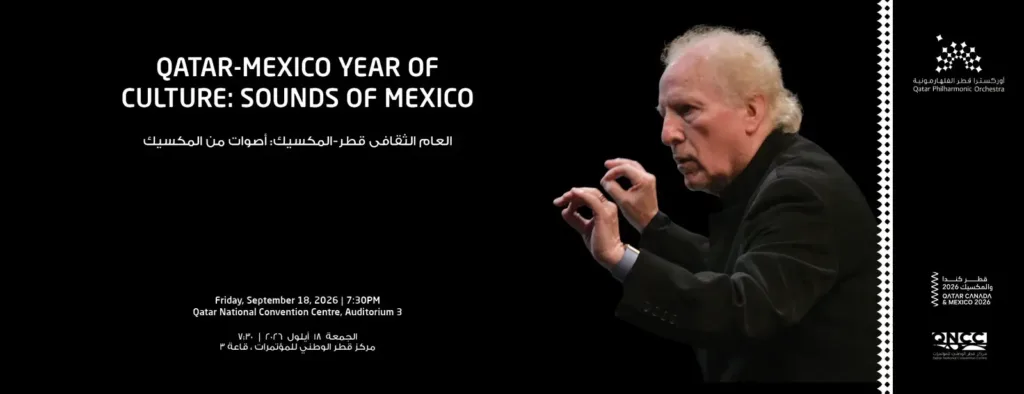
4. Sounds of Mexico: Qatar-Mexico Year of Culture at QNCC (September 18)
The Qatar Philharmonic Orchestra performs a second event this week, celebrating the vibrant colours and rhythms of Mexican music as part of the Qatar-Mexico Year of Culture. Conductor Enrique Diemecke, who grew up in Mexico City, leads a programme of Mexican orchestral works that will feel both festive and deeply personal for him. A genuinely different night from a standard QPO programme.
Date: Thursday, September 18, 2026 Location: Qatar National Convention Center, Doha Instagram: @qatarphilharmonic
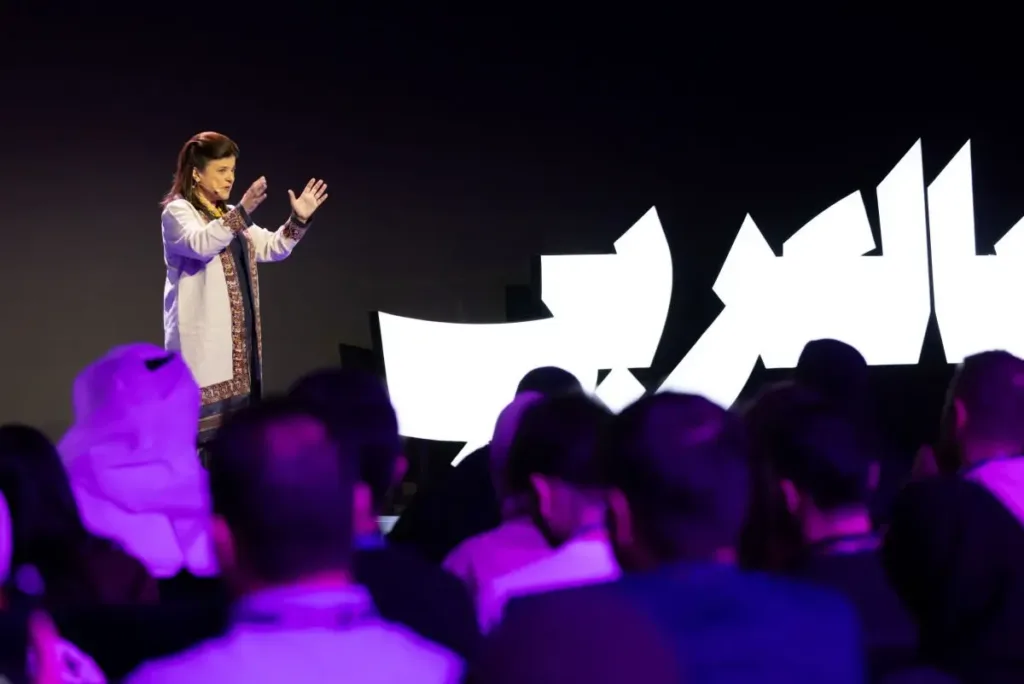
5. BilAraby Annual Gathering 2026 at Education City (September 19 to 20)
A two-day gathering at Multaqa, Education City Student Center, under the theme “With Our Ideas We Build.” Curated sessions, hands-on workshops, and open conversations for Arab intellectuals, innovators, and changemakers, in the tradition of the TED in Arabic platform that preceded it. Developed by Qatar Foundation to address the gap in high-quality Arabic content and cultural dialogue. The gathering runs across both days with registration required in advance.
Dates: September 19 to 20, 2026 Location: Multaqa, Education City Student Center Entry: Register to attend Website:bilaraby.qaInstagram: @bilaraby
6. Qterminals Qatar Classic Squash 2026 at Khalifa Complex (Until September 18)
World-class squash is in its final days at the Khalifa International Tennis and Squash Complex. The Qterminals Qatar Classic has been running since September 11 and wraps up September 18. Free to watch as a spectator, this is one of the stops on the PSA World Tour circuit.
Until: September 18, 2026 Location: Khalifa International Tennis and Squash Complex, Aspire Zone Entry: Check PSA for spectator access Website:psaworldtour.com
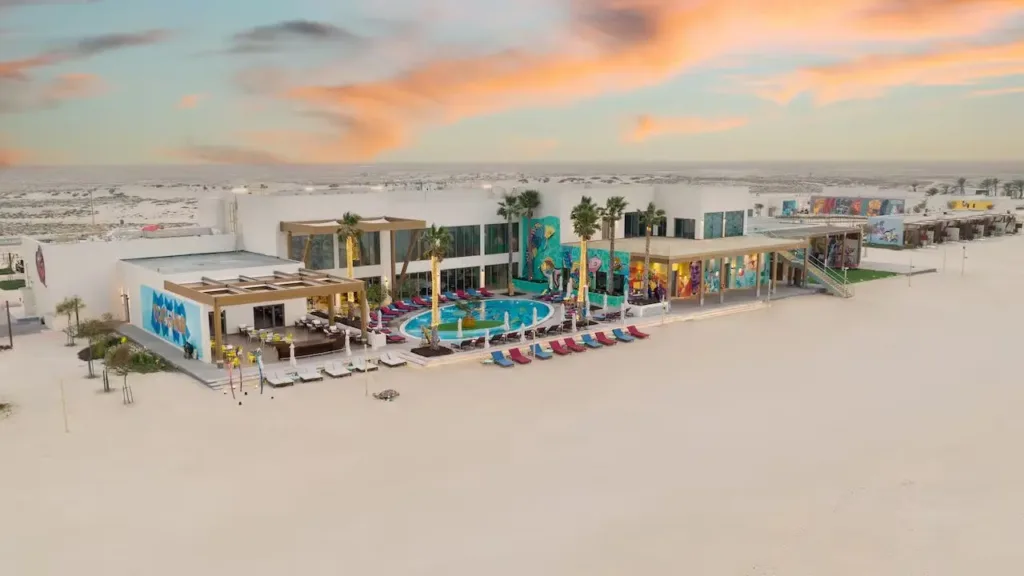
7. Fuwairit Kite Beach Activation (Until October 17)
Autumn beach season is here. Fuwairit Break runs daily at Fuwairit Kite Beach through October 17, with themed activities, sports, live entertainment, and local food. Entry is just QAR 15, and 10:00 AM to 8:00 PM hours mean you can make a full day of it now that morning temperatures are manageable again.
Until: October 17, 2026 Time: 10:00 AM to 8:00 PM Location: Fuwairit Kite Beach Entry: QAR 15
8. Colorverse Experience at Katara (Closes September 15)
The very last days. Colorverse at Katara Cultural Village closes on Monday September 15. If you haven’t gone yet, this Monday is your absolute final chance. Seven interactive zones, immersive story-driven adventure, minimum age 4.
Closes: Monday, September 15, 2026 Time: Weekdays 4:00 PM to 10:00 PM | Weekends 4:00 PM to 11:00 PM Location: South Parking, Katara Cultural Village Tickets: QAR 35 (weekdays) | QAR 55 (weekends) Booking:PlatinumlistFull guide:Colorverse Experience Doha 2026
9. Virtuocity Battleground Qatar 2026 at Doha Festival City (All September)
The USD 200,000 prize pool e-gaming tournament continues at Virtuocity in Doha Festival City’s South Food Court. Seven games, online and LAN qualifiers, live finals, free to watch as a spectator. The scale and professionalism of the setup this year, with professional esports arenas, broadcast-ready competition stages, and live audience seating, make this worth an evening out for anyone who has never attended a live esports event.
Until: September 30, 2026 Location: Virtuocity, South Food Court, Doha Festival City Entry: Free (spectators) Instagram: @virtuocityqa
10. MOQ Fit Club at Mall of Qatar (Final Days, Until September 19)
The Grand Finale Race of MOQ Fit Club takes place this week. Free professionally coached fitness sessions at Mall of Qatar have been running six days a week since July, and this is the closing week. Saturday community run and the step challenge leaderboard via QSFA app wrap up with prizes.
Closes: Saturday, September 19, 2026 Location: Activation Area and Oasis Stage, Mall of Qatar Entry: Free (Fit Island app for classes, QSFA app for step challenge) Website:mallofqatar.com.qa
Also This Week
Frame and Focus Photography Exhibition at Al Hosh Gallery, Marina Way. Free with registration. Until October 5. @tasweerqatar
Uzbekistan: Heritage in Motion at MIA (Sheikh Saoud Al Thani Gallery, First Floor). Free. Until November 28. @miaqatar
Qatar Cup 2026 matches continue at Khalifa International Stadium and Jassim Bin Hamad Stadium. Tickets from QAR 20. @qsl_official
Hala Summer Character Activations continue across Qatar malls through September 30. Mr Bean, Barbie, Moana, Pixar, Avengers and more. Free with minimum QAR 100 mall spend.
Quick Picks for the Week
Arabic comedy night? Taha Desouky at QNCC on Thursday. Tickets from QAR 285. Doors 9:00 PM.
Classical music? QPO Tchaikovsky at QNCC on Sunday. Book online only.
Immersive theatre? The Jury Experience opens Thursday at U Venue. From QAR 120.
Outdoor day? Fuwairit Kite Beach. QAR 15. Best time of year to go.
Last chance for Colorverse? Closes September 15 (Monday). Final days this weekend.
Cultural dialogue? BilAraby Annual Gathering at Education City, Friday and Saturday.
Gaming? Virtuocity Battleground at Doha Festival City, free to watch.
That’s your week. For more weekly roundups, things to do in Qatar, and Doha lifestyle guides, follow People and Qatar on Instagram @peopleandqatar.
FAQ: Things to Do in Qatar September 13 to 19, 2026
When is Taha Desouky performing in Doha? <cite index=”22-1″>Taha Desouky performs at Al Mayassa Theatre, QNCC on September 17, 2026 at 10:00 PM</cite>, with doors opening at 9:00 PM. Tickets start from QAR 285 and are available on Platinumlist. The show “Let’s Make It Personal!” is performed in Arabic.
What is QPO performing this week? The Qatar Philharmonic Orchestra performs Tchaikovsky’s Piano Concerto No. 1 with pianist Jae Hong Park on Sunday September 14, followed by the Manfred Symphony, at QNCC Auditorium 3. All tickets must be purchased online in advance on Platinumlist.
What is The Jury Experience in Doha? The Jury Experience is an immersive theatre show opening September 18 at U Venue where the audience becomes the jury in a case involving a fatal accident caused by a driverless AI car. Shows run at 6:30 PM and 8:00 PM through October 23. Tickets from QAR 120 on feverup.com.
When does Colorverse Experience close? Colorverse Experience at Katara Cultural Village closes on September 15, 2026. This weekend is the very last chance to visit. Tickets from QAR 35 on Platinumlist.
iPhone 18 Pro Qatar: Everything to Know Before You Pre-Order
The iPhone 18 Pro and iPhone 18 Pro Max are arriving in Qatar, and pre-orders open on September 12. Here is where you can pre-order, how much the new iPhones cost and when the first devices will be available.
Apple has officially unveiled the iPhone 18 Pro, iPhone 18 Pro Max and iPhone Duo, with Qatar retailers and telecom operators preparing for the new iPhone launch. Apple says the iPhone 18 Pro and Pro Max pre-order window opens on September 12, with availability from September 18.
The first big question for shoppers is simple: where can you pre-order the iPhone 18 Pro in Qatar?
Here is the current list.
iPhone 18 Pro Price in Qatar
According to the Qatar launch information:
Model
Starting price
iPhone 18 Pro
QAR 4,999
iPhone 18 Pro Max
QAR 5,399
iPhone Duo
QAR 8,349
The iPhone Duo is Apple’s first foldable iPhone. Apple says it opens into a 7.6-inch display and uses the same A20 Pro chip as the iPhone 18 Pro models.
When Does iPhone 18 Pro Pre-Order Start in Qatar?
iPhone 18 Pro and iPhone 18 Pro Max pre-orders start on September 12, 2026, at 3 PM in Qatar, according to the Qatar retailers and operators listed for the launch.
The phones are expected to be available from September 18.
For comparison, Apple’s global launch information confirms September 12 for pre-orders and September 18 for availability.
What about the iPhone Duo?
The iPhone Duo pre-order begins October 16, 2026, with availability expected later in October.
Apple’s current official schedule gives October 23 as the availability date.
Where to Pre-Order iPhone 18 Pro in Qatar
Ooredoo Qatar
Ooredoo will open iPhone 18 Pro pre-orders on September 12 at 3 PM.
Locations include Barwa Madinatna, Abu Sidra Mall, Al Watan and Mall of Qatar.
What Makes the iPhone 18 Pro Different?
Apple’s new Pro models introduce several major upgrades.
The iPhone 18 Pro and Pro Max feature Apple’s A20 Pro chip, a new 48MP Fusion Main camera with variable aperture, improved low-light photography and major battery improvements.
The iPhone 18 Pro Max also delivers Apple’s biggest battery-life improvement yet, with Apple claiming up to 43 hours of video playback.
And then there is the iPhone Duo.
It is Apple’s first foldable iPhone, with a 7.6-inch inner display and a 5.4-inch outer display when closed.
iPhone 18 Pro Qatar: Quick Guide
Pre-order date: September 12, 2026
Pre-order time: 3 PM Qatar time
Availability: September 18, 2026
iPhone 18 Pro: From QAR 4,999
iPhone 18 Pro Max: From QAR 5,399
iPhone Duo: From QAR 8,349
iPhone Duo pre-order: October 16, 2026
iPhone Duo availability: October 23, 2026
Where to pre-order: Ooredoo, Vodafone Qatar, Jarir, Gait, Starlink, Al Anees, E-Max, iCONNECT and other participating retailers.
If you are planning to buy the iPhone 18 Pro in Qatar, September 12 is the date to remember.
The iPhone 18 Pro and iPhone 18 Pro Max pre-orders open at 3 PM, with several major Qatar retailers and telecom operators taking orders.
And if you have been waiting for Apple’s first foldable phone, the iPhone Duo is the bigger story. Its pre-orders arrive on October 16, with availability scheduled for October 23.
Leaving your job in Qatar? Before you pack your bags, check your gratuity.
For many employees, end-of-service gratuity is one of the biggest amounts they are entitled to receive when their employment ends.
But there is a lot of confusion online.
Does gratuity apply if you resign? Does your housing allowance count? What happens after 5 years? What about 10 years? Do you need gratuity to be written in your job offer? And what can you do if your employer says, “There is no gratuity”?
Here is the simple answer, based on Qatar’s Labour Law.
For workers covered by Qatar Labour Law, the statutory minimum is three weeks, or 21 days, of the last basic wage for every year of service after completing at least one year. Part years are calculated proportionately.
The Qatar gratuity formula
The easiest way to calculate the statutory minimum is:
Gratuity = (Last basic salary ÷ 30) × 21 × Years of service
For example, if your last basic salary is QAR 5,000 and you worked for 3 years:
QAR 5,000 ÷ 30 × 21 × 3 = QAR 10,500
So your statutory minimum gratuity would be:
QAR 10,500
The law says the gratuity is based on your last basic wage, not simply your total monthly package.
Who is eligible for gratuity in Qatar?
Under Article 54, a worker who has completed at least one year of employment is entitled to end-of-service gratuity.
That means the one-year mark matters.
If you have worked:
Service
Basic salary
Minimum gratuity
1 year
QAR 5,000
QAR 3,500
2 years
QAR 5,000
QAR 7,000
3 years
QAR 5,000
QAR 10,500
5 years
QAR 5,000
QAR 17,500
10 years
QAR 5,000
QAR 35,000
These figures use the statutory minimum of 21 days per year.
And there is an important detail many people miss.
You do not necessarily lose the value of an incomplete year.
The law provides gratuity for fractions of a year proportionately.
Example: 3 years and 6 months
Basic salary: QAR 5,000
One year gratuity:
5,000 ÷ 30 × 21 = QAR 3,500
For 3.5 years:
QAR 3,500 × 3.5 = QAR 12,250
So the estimated statutory minimum is QAR 12,250.
Does gratuity apply if it is not mentioned in your job offer?
This is one of the biggest questions employees ask.
For workers covered by Qatar Labour Law, statutory rights do not depend simply on whether gratuity was written in your job offer.
Article 4 establishes that the rights prescribed by the Labour Law are minimum rights. A contractual condition that contradicts those rights is generally void unless it is more favourable to the worker.
So if someone says:
“Your offer letter does not mention gratuity, so you cannot claim it.”
That is not a complete answer.
The more important question is:
Are you a worker covered by the relevant labour legislation, and does another law or retirement system apply to you?
Qatar’s Labour Law has specific exclusions, including certain government employees, military and police personnel and some workers whose employment is governed by special laws. Domestic workers are governed by a separate law, which also provides for end-of-service gratuity after one full year, with a minimum of three weeks’ pay for each year of service.
Does your allowance count towards gratuity?
This is where many employees make a costly mistake.
Your Qatar gratuity calculation is based on your last basic wage under Article 54.
So do not automatically calculate it using your:
Total salary package
Housing allowance
Transport allowance
Food allowance
Other separate allowances
The statutory calculation uses the last basic wage.
For the statutory gratuity calculation, the starting figure is the QAR 6,000 basic salary, not automatically the QAR 8,500 total package.
However, if your employment contract or company policy provides a more favourable gratuity calculation, that can matter because the Labour Law establishes minimum rights.
What happens to your gratuity if you resign?
This is probably the question most employees want answered.
Resigning does not automatically mean you lose your gratuity.
The current Article 54 provides the gratuity entitlement after at least one year of service and does not create the old one-third or two-thirds resignation reduction that appears in some outdated online information.
So if you have completed the required service and resign while following the applicable termination and notice rules, your statutory gratuity does not simply disappear because you resigned.
But do not confuse gratuity with notice period.
Your resignation still needs to follow the applicable notice requirements.
For workers covered by the current Article 49 rules, the notice period is generally:
First and second year: 1 month After the second year: 2 months
Failing to observe the required notice can create compensation obligations.
What if you have worked for 5 years?
Let’s make this simple.
If your last basic salary is QAR 8,000:
Daily basic wage:
8,000 ÷ 30 = QAR 266.67
21 days:
266.67 × 21 = QAR 5,600
For 5 years:
5,600 × 5 = QAR 28,000
Estimated statutory minimum gratuity: QAR 28,000
There is no automatic rule in Article 54 saying that gratuity suddenly becomes 30 days per year after five years. The statutory minimum remains three weeks per year.
This is an important distinction because some online Qatar gratuity calculators and articles mix Qatar rules with rules from other GCC countries.
What if you have worked for 10 years?
Using the same QAR 8,000 basic salary:
QAR 8,000 ÷ 30 × 21 × 10
= QAR 56,000
So after 10 years, the statutory minimum would be approximately:
QAR 56,000
Again, the 21-day rate is applied for each year under Article 54.
Can an employer pay more than the legal minimum?
Yes.
This is an important point.
Article 54 says the gratuity is agreed between the parties, provided it is not less than three weeks’ wage for every year of service.
So think of 21 days as the statutory minimum, not necessarily the maximum your employer can offer.
If your contract, company policy or employment arrangement gives you a better benefit, check that before accepting the final settlement.
Can gratuity be deducted?
The Labour Law allows an employer to deduct from the service gratuity an amount owed by the worker to the employer.
That does not mean an employer can simply invent deductions.
If your final settlement looks wrong, ask for a written breakdown showing:
Basic salary used + service period + gratuity calculation + deductions + other final-settlement amounts
That makes it much easier to identify where the disagreement actually is.
Can you lose your gratuity?
There are exceptional circumstances.
Article 61 allows dismissal without notice and without end-of-service gratuity for specified serious cases, including certain cases involving falsified documents, serious financial loss, repeated serious breaches of duties, disclosure of company secrets, workplace assault, certain serious absence and certain criminal convictions.
The 2026 amendments to Qatar’s Labour Law also introduced additional labour-law provisions, including a new summary-dismissal ground relating to unlawful incitement of workers to strike in a way that disrupts operations.
So the simple rule is:
Resignation is not the same thing as dismissal for a statutory misconduct ground.
What if your employer does not pay your gratuity?
This is where the article needs to become genuinely useful, because this is a real problem employees search for.
You may see situations such as:
“I worked for four years and got nothing.”
Or:
“It has been two years since I left and my company still has not cleared my dues.”
Or simply:
“My employer says they don’t have money.”
Do not just rely on verbal promises.
Start by collecting:
Your employment contract
Qatar ID
Salary records
Bank statements where relevant
Resignation or termination letter
Last working date
Final settlement documents
Emails or messages with HR
Any written acknowledgment of the amount owed
Qatar’s Labour Law provides a dispute resolution route through the Ministry of Labour. Under the 2026 amendments, a labour dispute must first be presented to the relevant Ministry administration for amicable settlement. If it is not resolved within the prescribed process, it can be referred to the Labour Dispute Resolution Committee.
The Ministry also provides a Labour Complaint Form requiring information such as the employment contract, ID and details of the complaint.
When should your final settlement be paid?
This is another important search question.
Under Article 67, when an employment contract ends, the employer must pay the worker’s remuneration and other amounts due before the end of the working day following the termination date, subject to the exception in the law for a worker who leaves without giving the required notice. In that situation, payment is due within a period not exceeding seven days from the date the worker leaves.
Your final settlement may include more than gratuity.
Depending on your circumstances, check:
Unpaid salary + end-of-service gratuity + unused annual leave payment + applicable notice compensation or deductions + other contractual dues
Unused annual leave is particularly important. If the employment contract ends before the worker takes due annual leave, the law provides for a cash alternative for those leave days.
Your Qatar final settlement checklist
Before you sign anything, check these numbers:
1. Last basic salary Make sure the correct basic wage has been used.
2. Total service period Check your joining date and final working date.
3. Gratuity Check the 21-day-per-year statutory minimum.
4. Partial year Make sure eligible fractions of a year have been calculated proportionately.
5. Unused annual leave Check whether you are owed payment for unused leave.
6. Unpaid salary Check your final salary and any outstanding wages.
7. Notice period Check whether notice was served correctly and whether any notice compensation applies.
8. Deductions Ask for an explanation of every deduction.
9. Contract benefits Check whether your employment contract gives you more than the statutory minimum.
10. Get the settlement in writing.
The 30-second Qatar gratuity calculation
If you remember only one thing, remember this:
Last basic salary ÷ 30 × 21 × years of service
For example:
QAR 5,000 basic salary 3 years of service
5,000 ÷ 30 × 21 × 3 = QAR 10,500
That’s the statutory minimum calculation under Article 54 for a worker covered by the provision.
The biggest Qatar gratuity myths
Myth 1: “If gratuity isn’t in my offer letter, I don’t get it.”
Not necessarily. Statutory labour rights apply independently of whether a benefit is specifically written in an offer, subject to the law’s scope and any applicable special regime.
Myth 2: “If I resign, I lose my gratuity.”
Not automatically. Resignation itself does not cancel the Article 54 entitlement.
Myth 3: “My housing allowance must be included.”
Not under the statutory Article 54 calculation. The law uses the last basic wage.
Myth 4: “After five years, Qatar automatically calculates 30 days per year.”
Not under the Article 54 statutory minimum. The law specifies at least three weeks per year.
Myth 5: “If my company says it has no money, I have no option.”
Not necessarily. There are formal labour dispute mechanisms available through Qatar’s Ministry of Labour.
Frequently Asked Questions
How much gratuity do I get after 2 years in Qatar?
At the statutory minimum, you receive the equivalent of 42 days of your last basic wage.
For a QAR 5,000 basic salary:
5,000 ÷ 30 × 21 × 2 = QAR 7,000
How much gratuity do I get after 5 years in Qatar?
At the statutory minimum:
Basic salary ÷ 30 × 21 × 5
For QAR 5,000 basic salary, that is QAR 17,500.
How much gratuity do I get after 10 years in Qatar?
For a QAR 5,000 basic salary:
5,000 ÷ 30 × 21 × 10 = QAR 35,000
Is end-of-service gratuity mandatory in Qatar?
For workers covered by the relevant Labour Law provision who have completed at least one year, Article 54 establishes a minimum end-of-service gratuity.
Is gratuity based on basic salary or total salary?
The statutory calculation is based on the worker’s last basic wage.
Does resignation affect gratuity in Qatar?
Resignation by itself does not automatically cancel the statutory gratuity. However, employees should follow the applicable notice rules and check whether any special circumstances apply.
What if my employer refuses to pay my gratuity?
Keep your employment and payment documents and use the Ministry of Labour’s labour dispute process if the issue cannot be resolved with the employer.
Is gratuity mentioned in the Qatar Labour Law?
Yes. The main provision is Article 54 of Qatar Labour Law No. 14 of 2004.
Is there a Qatar gratuity calculator?
Yes, a calculator can make the calculation easier. The key inputs are your last basic salary and length of service. For a legally grounded article, however, the calculator should clearly state that it is an estimate of the statutory minimum and account for exceptions.
Astroworld Vol.002: Doha’s Automotive Exhibition Is Back for 2026
Astroworld Vol.002 is officially open at Astro Home Base in Al Bidda, bringing 13 enthusiast-owned road and race cars, Qatar’s growing track-day culture, and a closer look at the people behind the local automotive community.
After the first edition, Astroworld is back in Doha with Vol.002, and this time the focus is not simply on the cars. It is about the drivers, friendships, competition and the growing track-day culture shaping Qatar’s automotive scene.
ASTRO officially announced that Astroworld Vol.002 runs from September 10 to October 10, 2026, at Astro Home Base in Al Bidda.
What Is Astroworld Vol.002?
Astroworld Vol.002 is the latest automotive exhibition from ASTRO Automotive Services, a Qatari-owned automotive members’ club based in Al Bidda.
The second edition features 13 enthusiast-owned road and race cars, with the vehicles actively driven on local circuits.
That gives Vol.002 a different feel from a traditional car exhibition. The story is not just about rare or impressive cars. It is about the people who drive them and the community developing around Qatar’s track-day culture.
Astroworld Vol.002 Dates, Location and Tickets
Details
Information
Event
Astroworld Vol.002
Dates
September 10 to October 10, 2026
Location
Astro Home Base, Al Bidda, Doha
Cars
13 enthusiast-owned road and race cars
Tickets
Available on arrival at reception
Opening hours announced for the exhibition
2 PM to 10 PM daily
Address: Unit 1, Zone 12, Street 222, Building 322, Al Bidda, Doha.
ASTRO’s official website lists the same Al Bidda location and describes its home base as a 4,000 sqm underground facility built around automotive culture.
This Edition Is All About Qatar’s Track-Day Culture
The biggest change with Astroworld Vol.002 is the story behind the cars.
The exhibition celebrates Qatar’s growing track-day community, bringing together enthusiast-owned vehicles that are not simply displayed but actively driven on local circuits.
Visitors can expect a closer look at the cars, their drivers and the culture developing around road and race builds in Qatar.
More Than a Car Show
ASTRO describes itself as a space created for people who see cars as more than machines.
The story began with a single garage shed in Al Wakrah and a Porsche 911 GT3 RS before growing into ASTRO Home Base, a 4,000 sqm automotive facility in Al Bidda.
Today, the facility combines automotive services, storage, detailing, customisation, community experiences and events.
That history is a big part of what makes Astroworld Doha 2026 different. The exhibition is essentially a window into Qatar’s enthusiast car culture.
What Can You Expect at Astroworld Vol.002?
The main highlights include:
13 enthusiast-owned road and race cars
Cars actively driven on Qatar’s local circuits
A focus on track-day culture
Stories about the drivers and automotive community
A new chapter of experiences at ASTRO
Special partners including Vitamin Bar, Torba, SimWerks and Active Events
Coffee partnership with ROOTS by Earth
Is Astroworld Vol.002 Open to Everyone?
Yes, the Vol.002 exhibition is being presented as an open public event, with tickets available at reception on arrival.
One important distinction: ASTRO Home Base itself is normally a members-only facility, with public access provided during occasional open days and events.
So if you have been curious about the underground automotive space in Al Bidda, Astroworld Vol.002 is your chance to experience it during the exhibition period.
If you are searching for car events in Doha, automotive exhibitions in Qatar, track-day culture or things to do in Doha this September, Astroworld Vol.002 is one to have on your list.
It is not just about looking at expensive cars behind barriers. This edition is about the people actually driving them, the friendships forming around them and the automotive culture Qatar is building in real time.
Astroworld Vol.002 runs until October 10, 2026, at Astro Home Base, Al Bidda.
Qatar Taxis to Get Security Cameras Inside Vehicles
Qatar is moving to strengthen safety and oversight in taxis and limousine vehicles, with authorities set to require internal security cameras as part of tighter transportation regulations.
According to a report by Al Sharq, authorities are preparing stricter field measures covering taxis of different types and models. The reported measures include requiring limousine companies to install surveillance cameras inside their vehicles.
The move is aimed at making taxi journeys safer for both passengers and drivers, while creating a reliable record if a complaint, incident or violation is reported.
Why are cameras being installed in Qatar taxis?
The reported purpose of the Qatar taxi cameras is to:
Document trips
Protect passengers and drivers
Help deter unacceptable behaviour and violations
Provide a security record when complaints are made
Strengthen monitoring of taxi and limousine services
The cameras are also expected to be connected to central operations rooms, allowing authorities to monitor situations more effectively.
Qatar is also increasing taxi inspections
The camera requirement comes as Qatar continues to tighten oversight of passenger transportation companies.
The Ministry of Transport has already been carrying out inspection campaigns with relevant Ministry of Interior departments. Its Q1 2026 campaigns recorded 32 violations involving limousine companies and passenger transportation companies operating through electronic applications.
Authorities are also checking whether drivers have the required records, licences and permits, with particular attention to vehicles or drivers operating without proper authorisation.
What does this mean for passengers?
For people using Qatar taxis, limousines and ride-hailing services, the reported changes are primarily about improving safety and accountability.
If an incident occurs during a journey, an in-vehicle surveillance system could provide an official record that helps establish what happened.
Qatar already has legislation regulating the use of security and surveillance cameras. The country’s CCTV law sets rules governing recorded data, including restrictions on transferring, saving, sending or publishing recorded information without approval from the competent authority.
Qatar’s Ministry of Interior also has a specialised security systems department responsible for inspecting surveillance systems in public transport and public places to check their technical compliance and effectiveness.
What we know so far
What is being reported: Internal surveillance cameras will be required in limousine vehicles, alongside tougher inspections.
Why: Passenger and driver safety, accountability and prevention of violations.
Monitoring: Cameras are reported to be linked to central operations rooms.
Inspections: Authorities are increasing checks on vehicles, technical standards, drivers and permits.
Important: The latest report does not specify a rollout date, camera specifications, recording period specifically for taxis, or whether every existing taxi must be retrofitted immediately. Those details should not be assumed until officially announced.
For anyone regularly using Doha taxis or Qatar limousine services, this is a significant change because the journey itself could soon be subject to an official security recording system.
Qatar Airways has revealed how it managed one of its biggest operational challenges of 2026, supporting around 16,400 stranded passengers after the complete closure of regional airspace on February 28.
The airline’s Chief Operating Officer, Abdullah Ali, said experience gained from previous crises, including the COVID-19 pandemic and the FIFA World Cup Qatar 2022, helped Qatar Airways activate a detailed emergency plan and move quickly when flights were suddenly disrupted.
What happened during the February 28 airspace closure?
On February 28, Qatar’s Civil Aviation Authority temporarily suspended air traffic in Qatari airspace as a precautionary safety measure. Qatar Airways subsequently suspended flights to and from Doha.
The disruption left around 8,000 passengers stranded in Doha, while another 8,400 passengers were stranded at airports across Qatar Airways’ international network.
What followed was a huge logistical operation involving hotels, meals, customer support, alternative transport and eventually evacuation and repatriation flights.
16,400 passengers, 61 hotels and 15,600 rooms
One of the biggest challenges was finding somewhere for thousands of passengers to stay while there was no clear timeline for when the airspace would reopen.
Qatar Airways moved stranded passengers in Doha into hotels, covering accommodation and board at the company’s expense.
The airline booked approximately 15,600 hotel rooms across 61 hotels in Doha.
It also deployed Qatar Airways staff to those hotels around the clock to support passengers, coordinate with guests and work on alternative travel arrangements.
For passengers waiting at Hamad International Airport, the airline provided more than 15,000 meals during the disruption.
The pressure was not limited to airports and hotels.
Qatar Airways’ call centres faced more than 70,000 customer interactions every day, more than double normal volumes.
The airline responded by moving additional staff into customer service roles and increasing shift capacity.
According to the COO, the airline was then able to rebook around 8,000 passengers per day.
That gives a sense of how quickly the airline had to scale its operations during the crisis.
Qatar Airways used planes, buses and alternative routes
With normal flight operations unavailable, Qatar Airways had to look beyond traditional air travel.
The airline worked with Mowasalat and Saudia to arrange special flights from Jeddah to Dammam, followed by chartered bus journeys across the border to reunite passengers with their families in Doha.
Other passengers were moved by land from Doha towards Riyadh, while an exceptional Riyadh to Frankfurt flight helped travellers whose journeys had originated in Qatar.
The response effectively turned into a multi-modal transport operation, combining flights, buses, hotels and ground teams.
What happened to passengers stranded overseas?
The 8,400 passengers stranded outside Qatar presented another major challenge.
Qatar Airways worked with the Qatar Ministry of Interior, Ministry of Foreign Affairs and international embassies to coordinate solutions.
From March 7, just one week after the February 28 airspace closure, Qatar Airways began targeted evacuation and repatriation flights in coordination with diplomatic missions.
The objective was straightforward: get stranded passengers safely back to their destinations.
Qatar Airways says World Cup experience helped
According to Abdullah Ali, the airline’s crisis response was built on lessons learned from previous major events.
That included the COVID-19 pandemic and the experience of operating during the FIFA World Cup Qatar 2022.
Those experiences helped Qatar Airways prepare for a situation where thousands of passengers suddenly needed accommodation, food, alternative transportation and rebooking at the same time.
The airline also activated its Integrated Operations Center and Customer Support and Disruption Management Center at Hamad International Airport as part of the emergency response.
Safety came first
Despite the enormous logistical pressure, Qatar Airways said passenger and crew safety remained the central priority.
The airline’s original February 28 response also confirmed that flights to and from Doha were suspended because of the airspace closure and that additional ground staff had been deployed to support affected passengers.
The Qatar Civil Aviation Authority said the airspace suspension was a precautionary measure focused on maintaining the highest levels of safety and security for flights.
What this means for Qatar Airways passengers
The February crisis showed how quickly a major airspace disruption can affect an international airline.
For Qatar Airways passengers, the response went far beyond simply cancelling or delaying flights. The airline had to find hotel rooms, provide meals, manage tens of thousands of customer interactions, arrange alternative routes and coordinate with governments and embassies.
The scale of the operation is reflected in the numbers:
16,400 passengers supported. 15,600 hotel rooms booked. 61 hotels used in Doha. 15,000+ meals provided. 70,000+ daily customer interactions. 8,000 passengers rebooked per day.
Qatar Airways says it continues to refine its operational systems so it can respond more effectively to future disruptions while keeping passenger safety and service quality at the centre of its plans.
Qatar has introduced an updated rule governing how employers must transfer workers’ wages, with salaries required to be deposited through the Wage Protection System within seven days of the due date. The change was published in Official Gazette Issue No. 15 of 2026 through Minister of Labour Decision No. 50 of 2026.
The decision amends provisions of the existing regulations governing Qatar’s Wage Protection System, or WPS, and applies to workers covered by the Labour Law.
What is Qatar’s new 7-day salary rule?
Under the amended provision, employers must transfer wages for workers paid on an annual or monthly basis into their bank accounts at financial institutions in Qatar within seven days from the wage due date.
The transfer must be made through the Wage Protection System (WPS).
For monthly and annual wage workers, the salary becomes due on the first day of each calendar month.
For other workers covered by the provision, wages are due on the first day of every two weeks.
Qatar salary payment rule at a glance
Rule
What it means
Salary system
Wage Protection System (WPS)
Monthly/annual workers
Wages due on the first day of each calendar month
Payment deadline
Within 7 days of the due date
Other workers
Wages due on the first day of every two weeks
Payment method
Bank account through WPS
Decision
Minister of Labour Decision No. 50 of 2026
Published in
Official Gazette Issue No. 15 of 2026
Does this mean salaries can be delayed for 7 days?
Not exactly.
The seven-day period is the legal window specified for transferring wages from the due date. For monthly workers, the wage is due on the first day of the calendar month, and the employer must transfer it within seven days through WPS.
So workers should not interpret the rule as saying that employers have a general right to hold salaries for seven days beyond every expected payday.
Why the Wage Protection System matters
Qatar’s Wage Protection System is the mechanism used to monitor the payment of workers’ wages through financial institutions.
The system is designed to make salary payments more transparent and help ensure workers receive their wages through the banking system. Qatar introduced WPS in 2015 as part of wider labour reforms.
The latest decision updates the regulations governing how wages are transferred under this system.
When does the new Qatar salary rule take effect?
The decision was published in Official Gazette Issue No. 15 of 2026 on September 8, 2026.
The decision states that it comes into force on the day following its publication in the Official Gazette.
All relevant authorities are required to implement the decision within their respective areas of responsibility.
What workers in Qatar should know
If you are employed under Qatar’s Labour Law, the key point is simple:
Your wages are required to be transferred through WPS within seven days of the applicable due date.
For monthly and annual wage workers, the due date is the first day of the month.
For other workers, wages are due on the first day of every two weeks.
Workers who experience salary payment problems should keep records of their employment contract, expected salary date, bank statements and payment history.
What employers in Qatar need to do
Employers covered by the decision need to ensure that their payroll systems comply with the updated WPS requirements.
That means wages must be transferred to workers’ bank accounts through the approved system within the specified seven-day period.
The decision places implementation responsibility on the relevant authorities within their respective jurisdictions.
Qatar salary rule 2026 explained
The biggest takeaway is that Qatar’s updated WPS rule sets a clear seven-day window for wage transfers after the applicable due date.
For monthly and annual workers, wages are due on the first day of the month.
For other workers covered by the provision, wages are due every two weeks.
The change is part of Qatar’s continuing development of labour regulations and wage protection mechanisms. Earlier in 2026, Qatar also introduced wider amendments to its Labour Law aimed at improving labour-market regulation and compliance.
The simple version
Qatar workers: Your wages must be transferred through WPS within seven days of the due date.
Monthly workers: Salary is due on the first day of each month.
Other workers: Salary is due on the first day of every two weeks.
Employers: Wage transfers must comply with the updated WPS rules.
Effective date: The decision takes effect the day after publication in the Official Gazette.
Frequently Asked Questions
What is the new salary rule in Qatar?
Qatar’s updated rule requires employers to transfer wages through the Wage Protection System within seven days of the wage due date.
When is salary due in Qatar?
For workers paid monthly or annually, wages are due on the first day of each calendar month. Other workers covered by the provision have wages due on the first day of every two weeks.
What is WPS in Qatar?
WPS stands for Wage Protection System. It is the system through which covered employers transfer workers’ wages to their bank accounts.
Can an employer delay salary for seven days?
The decision provides a seven-day period from the due date for transferring wages. It should not be interpreted as a blanket permission for employers to arbitrarily delay salaries.
When does Qatar’s new wage rule take effect?
The decision takes effect the day after its publication in the Official Gazette.
A fire broke out on a marine vessel at Al Wakra Port, with Qatar Civil Defence successfully bringing the blaze under control. No injuries were reported, according to the Ministry of Interior.
The incident was reported by Qatar’s Ministry of Interior on September 9, 2026, with Civil Defence teams responding to the fire at the port.
The Civil Defence brings under control a fire on a marine vessel at Al Wakra Port, with no injuries reported. #MOIQatar
The fire broke out on a marine vessel at Al Wakra Port before Civil Defence teams intervened and contained it.
The Ministry of Interior confirmed that the fire was brought under control and that no injuries were reported.
No further details about the cause of the fire, the vessel involved or the extent of any damage were provided in the initial announcement.
No injuries reported
The key update for the public is that there were no reported injuries following the Al Wakra Port vessel fire.
Civil Defence successfully controlled the incident, according to the Ministry of Interior.
Authorities have not released additional information on whether the fire affected port operations.
Qatar Civil Defence responds quickly
The incident highlights the role of Qatar Civil Defence in responding to fire emergencies and protecting people and property.
The latest response comes shortly after Qatar and Saudi Arabia held their first meeting to activate a civil defence cooperation agreement, aimed at strengthening readiness, exchanging expertise and improving emergency response mechanisms.
For now, the Ministry’s latest confirmation is clear: the marine vessel fire at Al Wakra Port has been brought under control and no injuries have been reported.