

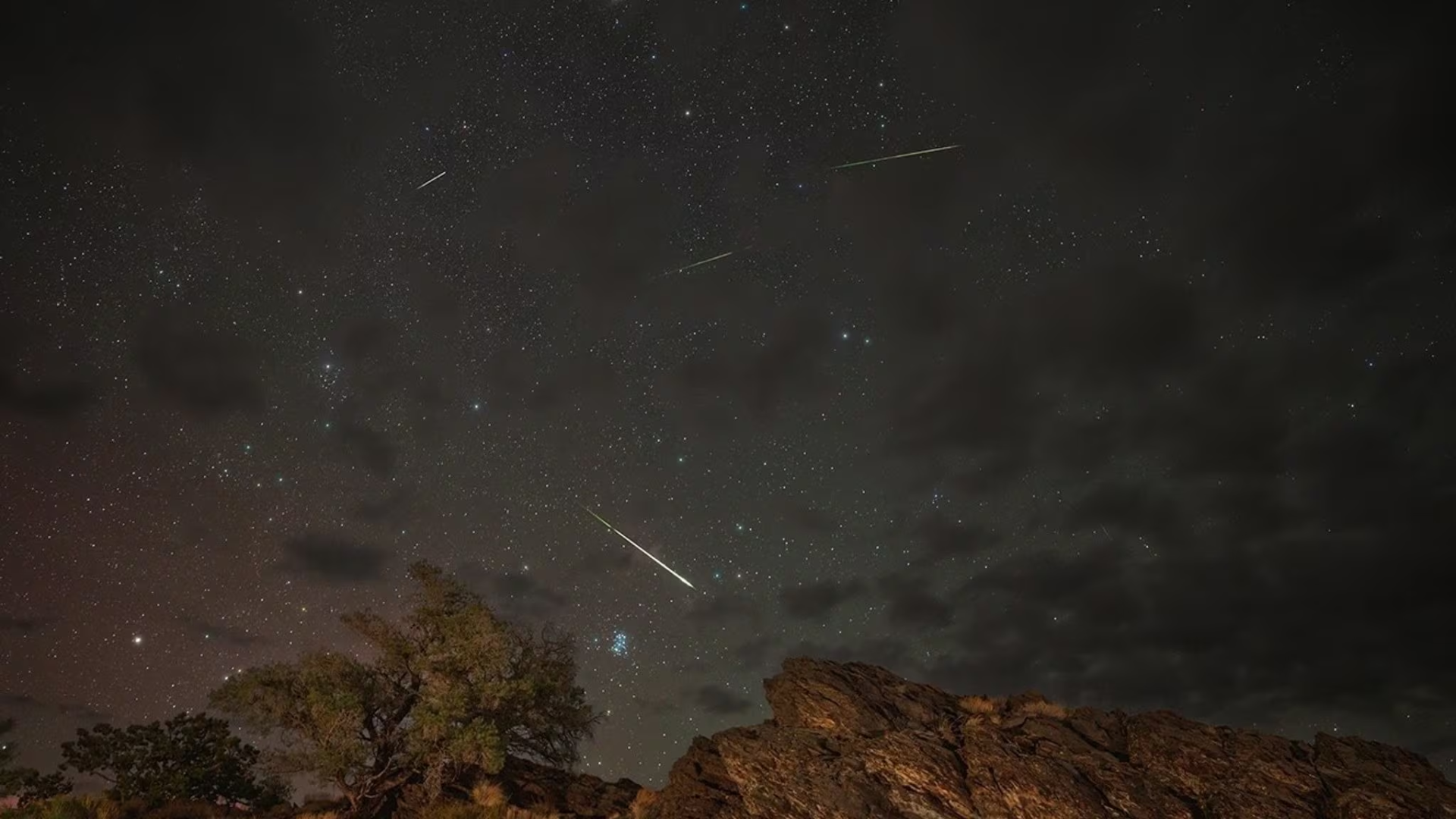
Perseid Meteor Shower Qatar 2026: Peak Dates, Best Viewing Spots and Where to Watch Tonight
Look up tonight. Qatar’s sky is about to deliver one of the most spectacular natural shows of the year. The Perseid meteor shower is peaking right now, with Qatar Calendar House confirming that residents can observe the peak from Thursday August 13 evening through to dawn on Friday August 14, with expert predictions ranging from 60 to 100 shooting stars per hour under good viewing conditions.
No telescope. No equipment. Just your eyes, a dark spot away from city lights, and a few hours of patience. Here is everything you need to know to make the most of it.
What Is the Perseid Meteor Shower?
The Perseids are one of the brightest and most reliable meteor showers in the annual calendar, returning every year in mid-August as Earth passes through the debris trail left by Comet 109P/Swift-Tuttle. As tiny fragments of the comet, most no bigger than a grain of sand, enter Earth’s atmosphere at around 59 kilometres per second, they burn up in brilliant streaks of light across the sky. Because they move so fast, Perseid meteors often leave glowing trails behind them that linger for a second or two after the streak has passed.
The shower is active from mid-July through late August, but the peak night, when Earth moves through the densest part of the debris trail, is the night of August 12 to 13 and into the early hours of August 14. This is your window.
When to Watch the Perseid Meteor Shower from Qatar
Peak night: Thursday August 13 to Friday August 14, 2026
Best viewing time: After midnight and before dawn on Friday August 14. The pre-dawn hours from around 2 AM to 5 AM typically produce the highest rate of meteors because this is when your location on Earth is facing directly into the direction of the incoming meteors.
Evening of August 12: Also worth watching. The Everester Observatory event (details below) runs from August 12, and while the rate is slightly lower than peak night, conditions are still excellent with up to 25 meteors per hour expected in the earlier part of the evening.
Moonlight: Viewing conditions are especially favourable this year because moonlight will not significantly interfere with the display.
Best Places to Watch the Meteor Shower in Qatar
The single most important factor in watching a meteor shower is darkness. Doha’s city lights create light pollution that washes out fainter meteors. Getting even 20 to 30 kilometres away from the city makes a significant difference to how many meteors you see.
Al Ghariya Beach (northern Qatar): One of the most consistently recommended spots by Qatar’s stargazing and astronomy community for exactly this kind of event. Located in the far north of Qatar, Al Ghariya has minimal surrounding light pollution and clear open sky views. It is a remote beach, so bring everything you need with you.
Simaisma Beach: Closer to Doha than the far north options but still significantly darker than the city. A popular destination for families and groups who want a beach setting with less driving time. The combination of sea air and a dark sky makes this a genuinely lovely spot.
Further North Generally: The community consensus is clear: the further north you go from Doha, the darker the sky and the better the viewing. If you are willing to drive an hour or more, the payoff in meteor count is real.
Any Desert Area Away from City Lights: Qatar’s flat desert terrain means you get an almost completely unobstructed horizon in all directions, which is ideal for meteor watching. Head south along the Dukhan Highway or into the desert interior areas and find a safe, open spot to park and look up.
Everester Observatory Event (see below): For those who want a guided, organised experience with telescopes, expert guidance and refreshments, the Everester Observatory event is the best option.
Organised Event: 360 Degree Universe Experience at Everester Observatory
If you want more than just lying on a mat in the dark, Everester Observatory is hosting a special Perseid Meteor Shower Event across both peak nights.
Dates: August 12 and August 13, 2026
Time: 8 PM to 3 AM
Location: Everester Observatory (private location)
Price: QAR 100 per person
Contact: 55482045 (advance payment required to confirm reservation)
What is included: Meteor shower viewing from a private observatory location, telescope viewing with expert guidance, hot and cold refreshments, family-friendly atmosphere, and an excellent setting for astrophotography.
On the evening of August 12, expect up to 25 meteors per hour. On the peak night of August 13, the observatory will be operating through the prime viewing window. Seats are limited and advance payment is required, so contact them as early as possible to secure a spot.
Tips for Watching the Perseid Meteor Shower
No equipment needed. Do not bring a telescope or binoculars. Meteors move far too fast and across too wide an area of sky for magnification to help. Your naked eyes are the best tool for this.
Give your eyes time to adjust. When you arrive at your dark viewing spot, spend at least 15 to 20 minutes in the dark without looking at your phone screen. Your eyes need time to adapt to the darkness and become sensitive enough to pick up fainter meteors. A single glance at a bright phone screen resets this process entirely. If you need to use your phone, cover it with a red filter or switch to a low-brightness red-screen mode.
Lie flat on your back. Looking straight up gives you the widest possible view of the sky. A blanket, a camping mat or a reclining car seat all work well.
Look generally toward the northeast. The meteors appear to radiate from the Perseus constellation, which rises in the northeast. However, meteors will streak in all directions across the sky, so it is worth scanning broadly rather than staring at a fixed point.
Dress for the desert night. Even in August, temperatures in Qatar drop noticeably after midnight in open desert or coastal areas. Bring a light jacket, a blanket, and water.
The best hours are after midnight. While you will see some meteors in the early evening, the rate increases significantly after midnight as your location on Earth rotates to face the incoming stream of debris more directly.
Frequently Asked Questions
Can you see the Perseid meteor shower from Qatar?
Yes. Qatar Calendar House has confirmed the Perseid meteor shower is visible from Qatar, peaking on the night of August 13 through to dawn on August 14, 2026.
What time is the meteor shower tonight in Qatar?
The best viewing window is from midnight through to dawn on Friday August 14. The pre-dawn hours from around 2 AM to 5 AM typically produce the highest meteor rates.
How many shooting stars will be visible in Qatar tonight?
Qatar Calendar House and experts predict 60 to 100 meteors per hour under good conditions during the peak, though light pollution near Doha will reduce this. Heading north to darker areas significantly improves what you see.
Where is the best place to watch the meteor shower in Qatar?
Al Ghariya Beach and Simaisma Beach are the most recommended community locations. Any dark area well away from Doha’s city lights will give significantly better results.
Is there an organised meteor shower event in Qatar 2026?
Yes. Everester Observatory is hosting a 360 Degree Universe Experience meteor shower event on August 12 and 13 from 8 PM to 3 AM at QAR 100 per person. Contact 55482045 to book.
Do you need a telescope to see the Perseid meteor shower?
No. The Perseids are visible with the naked eye and actually better viewed without a telescope, which narrows your field of view too much.